

DILR
September 29, 2026
How To Recover From A Wrong Start On A DILR Set Explained
A wrong assumption early in a DILR set does not mean starting again. Here is how to find the break point and salvage the work you have already done. Read on.
Read
Data Interpretation and Logical Reasoning is the section CAT toppers credit most for percentile jumps. The Optima Learn DILR blogs teach set selection, caselet decomposition, table-and-chart reasoning, and arrangement puzzles using actual CAT PYQs. Read them as a system (not a tip list) and pair them with timed sectional practice on our 20,000+ PYQ corpus.
September 29, 2026
A wrong assumption early in a DILR set does not mean starting again. Here is how to find the break point and salvage the work you have already done. Read on.
September 29, 2026
A DILR set with more questions is not automatically easier or harder. Here is what the question count actually tells you during set selection. Read on.
September 29, 2026
Many DILR questions can be answered before the arrangement is complete. Learn to spot which ones, and how partial information already fixes answers. Read on.
September 29, 2026
DILR sets borrow real world dressing but follow puzzle logic. Understanding which parts are decoration changes how quickly you read a new set. Read on.
September 24, 2026
Doable and cheap are different properties and selection checks only one of them. See the 4 causes and the drill that exposes which one is yours instead.
September 24, 2026
A wrong MCQ costs a mark and a wrong TITA response costs nothing at all. See why two questions inside one set can deserve opposite treatment in practice.
September 24, 2026
Most of what feels like difficulty is load rather than logical complexity here. See the 4 loads running at once and why paper always beats memory too.
September 24, 2026
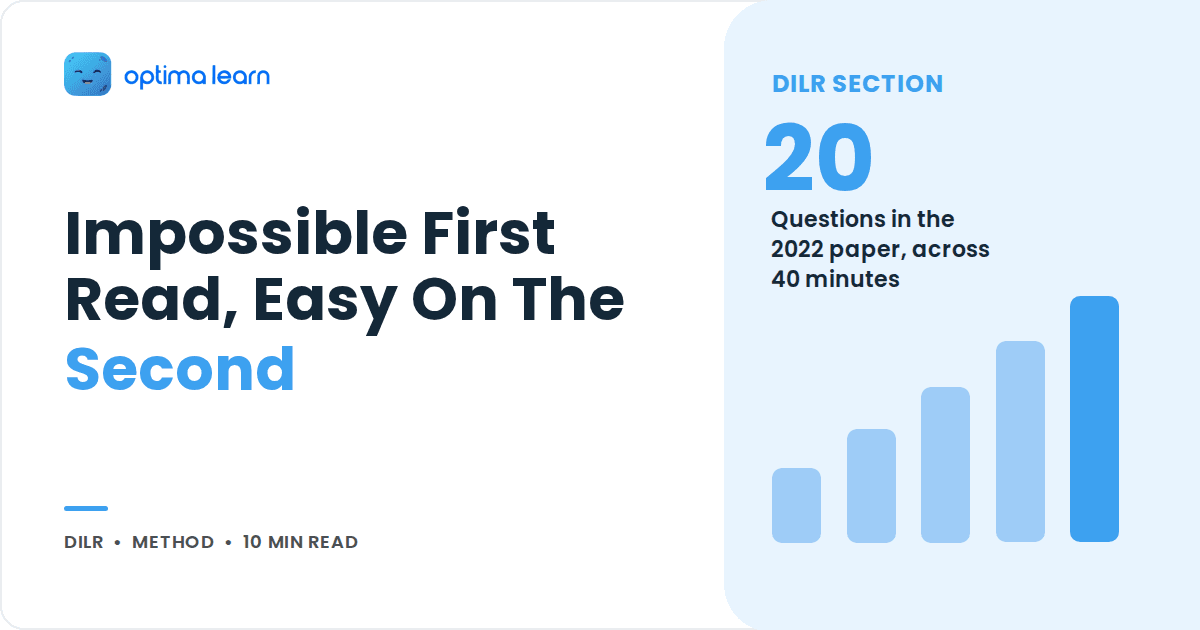
The first read builds a frame and the second read simply uses it. See how to build that same frame deliberately in about twenty seconds instead instead.
September 23, 2026
A sitter is easy relative to a reader, so no visible feature can predict it. See why the usual proxies fail and the sweep that replaces all the guessing.
September 23, 2026
Constraints are what let you deduce, so more of them usually means faster solving. See why length is not complexity and the 3 cases where density hurts.
September 23, 2026
Most apparent gaps are conventions rather than missing information. See which assumptions are expected, which are banned, and the test that separates them.
September 23, 2026
The clean split between DI and LR dissolved, and selection now carries far more weight. See what transferred, what did not, and how to use older sets.
September 23, 2026
Solvable and cheap are different properties, and selection only checks one. See the 4 drivers of overrun and the checkpoints that catch them early on.
September 23, 2026
A flat first year is entirely normal, because DILR improves in steps. See the 4 mechanisms behind the jump and which 3 of them you can install right now.
September 23, 2026
It is neither, and the third answer changes what you should train. See what speed in DILR really consists of and how to tell which half is failing you.

September 23, 2026
Puzzles build deduction and the section tests three more things on top of it. See the 5 structural differences and what to practise once puzzles stall.
September 22, 2026
Comprehension is the expensive phase and solutions skip it entirely. See the 4 properties that make it slow and the drill that targets it without solving.

September 22, 2026
DILR reading is precision on plain language, not comprehension of argued prose. See where the real difficulty sits and the finite list that covers most of it.
September 22, 2026
DILR has high variance rather than a rising difficulty trend, and the two get confused. See where the variance comes from and what has genuinely moved.

September 22, 2026
No set count produces a percentile, and the anecdote gets the causation backwards. See what is genuinely true in it and how to decide your own number properly.
September 17, 2026
Sets are built to resolve, so the feeling is a symptom. See the 4 causes behind it, how to tell them apart in a minute, and which one is worth restarting for.
September 17, 2026
A solved set still trains representation, selection and whether your method stuck. See the 4 ways to re-use what you have and why poor sources cost you.
September 17, 2026
Reasoning moves slowly but decisions move in days, which is why a month works here. See the 3 levers, the four week structure, and what to stop doing entirely.
September 17, 2026
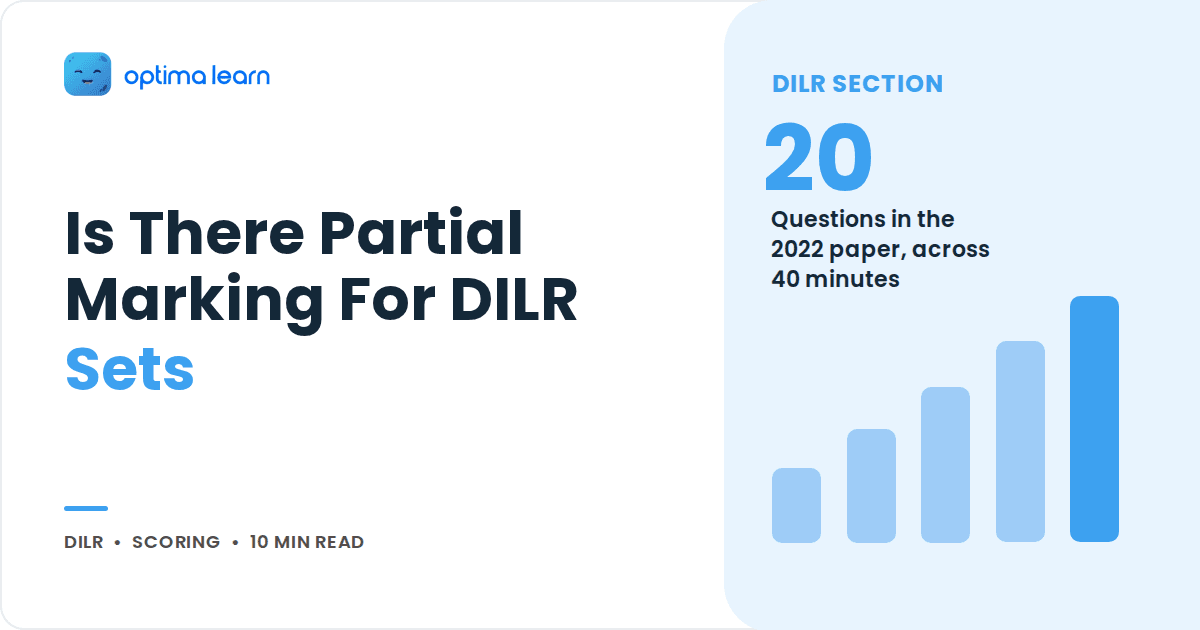
There is no partial credit for a set, and questions are marked individually. See why both common beliefs are wrong and the 30 seconds that recovers real marks.
Jump straight into another vertical of the Optima Learn blog.
Quick answers to common questions about Optima Learn's CAT blogs, our editorial process, and how to use the articles in your prep.
Optima Learn turns the strategy you read here into a daily plan you can execute. Get a personal AI agent, 20,000+ tagged PYQs, mock test analysis, and a milestone planner that adapts to your weak areas.