
CAT Prep Routine Broken? The 3-Step No Guilt Restart
You have not lost your CAT preparation. You have lost five days of it, and those are not the same thing. Somewhere between the missed Monday and today, most aspirants quietly rewrite the story into a bigger one, where a broken streak means the whole plan is gone and starting again means starting over from zero.
That story is wrong, and believing it is what actually causes the damage. The five missed days cost you five days of practice. The guilt spiral that follows, the extra week spent avoiding your own tracker because looking at it feels bad, costs far more than the original gap ever did.
Before anything else, resist the urge to make up for lost time with a marathon session today. Open CAT practice questions from a topic you already know, and do one normal sized set.
- A broken routine costs you exactly the days you missed. Guilt is what turns it into a bigger loss.
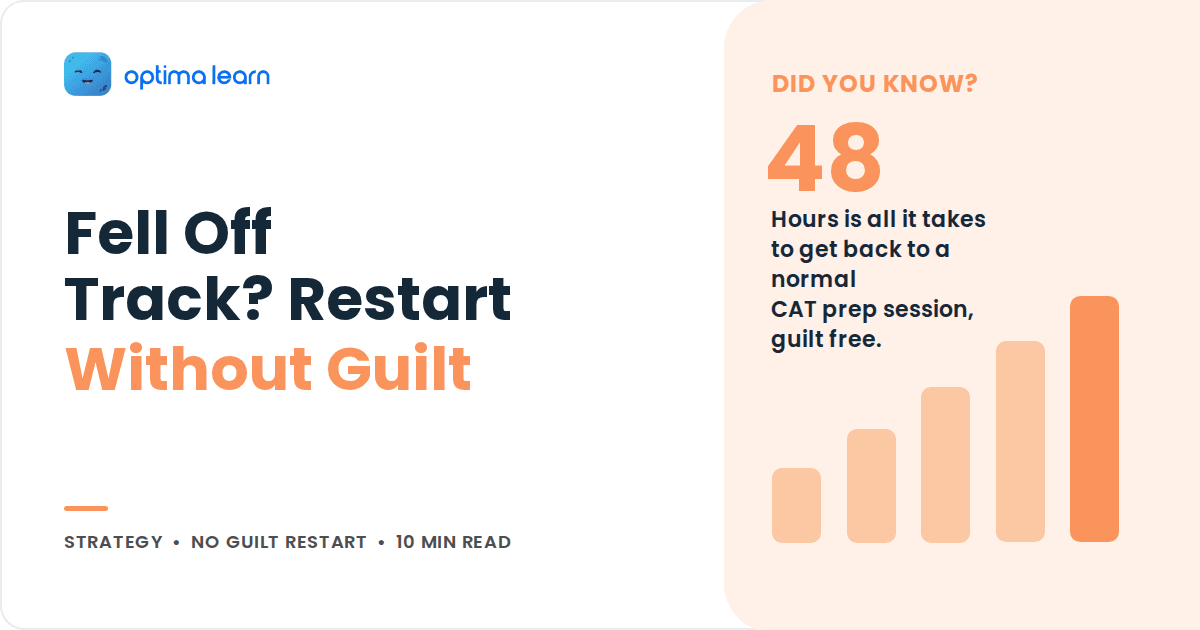
- The No Guilt Restart Rule gets you back to a normal session within 48 hours, without a catch up week or a fresh 30 day plan.
- Trying to make up missed days in one heroic session is the single most common way a restart fails a second time.
- Naming the real reason you stopped matters more than promising yourself it will not happen again.
- A break becomes a pattern only when the same trigger keeps causing it. One honest look at the trigger prevents the next one.
Why Restarting Feels Harder Than the Break Itself
Missing one day of CAT prep is easy to explain away. Missing five creates a different problem entirely, one that has nothing to do with the material itself. It creates a story about who you are as a preparer, and that story is almost always harsher than the facts support.
The longer the gap sits unaddressed, the more it accumulates weight it did not earn. Day two feels like a slip. Day five starts to feel like evidence, proof that you were never disciplined enough for this exam in the first place. None of that is true, but it feels true, and feeling true is enough to keep someone avoiding their own study tracker for another week.
This is where the story quietly does more damage than the break itself. An aspirant who missed five days and returns on day six loses five days of practice, a small, recoverable amount over a six month cycle. An aspirant who missed five days and then avoids their tracker for another two weeks out of shame loses nineteen days, almost four times as much, to a feeling rather than to any real obstacle.
Mentors who have coached hundreds of aspirants through a full CAT cycle say the same thing almost word for word. The break itself rarely decides who reaches 99 percentile. What decides it is how quickly someone gets back to a normal session without punishing themselves first.
The No Guilt Restart Rule: 3 Steps Back In
Getting back on track does not need a dramatic reset, a new 30 day plan, or a weekend spent making up for lost time. It needs three specific steps, done in order, within 48 hours of noticing the break.
Step 1: Name the Real Reason, Not the Excuse
Write one honest sentence about why the days actually went missing. Not "I got lazy," which explains nothing, but the specific trigger: a heavy exam week at college, a family event, a stretch of genuine burnout. The real reason tells you whether this needs a schedule fix or just a restart.
Step 2: Return at Your Normal Session Size, Not Bigger
The instinct to make up for lost time by doubling today's session is the single biggest reason restarts fail a second time. Come back at your usual size. The goal of day one back is proving the habit still exists, not closing the entire gap in one sitting.
Step 3: Skip the Post Mortem for the First Week
Resist analysing exactly how far behind you are, or rebuilding your whole timeline, in the first few days back. That analysis is useful eventually, but done too early it becomes another way to stay stuck in the break instead of moving past it.
Notice what is missing from this list: no catch up plan, no doubled hours, no apology tour through your own study tracker. The No Guilt Restart Rule works precisely because it treats the break as closed the moment you sit down again, not as a debt that needs repaying first.
The Catch Up Trap, and Why It Backfires
Almost every aspirant's first instinct after a break is the same: plan an intense catch up session to close the gap in one go. It feels responsible, even virtuous, like the sensible way to make amends for the days that went missing. It is usually the fastest route to a second break.
Scheduling a 4 hour catch up session on day one back, after five days of no prep, sets a bar that a genuinely rested body and brain cannot clear. When that session inevitably falls short or exhausts you completely, it reads as further proof the restart is not working, and the second break follows within days.
The maths behind this is simple, even if it rarely feels that way in the moment. Five missed days at a normal pace is a five day gap. Five missed days followed by one exhausting catch up session and a resulting week of avoidance is closer to a three week gap. The catch up attempt, meant to fix the problem, is what makes it worse.
This is worth naming clearly because the instinct feels responsible in the moment, not reckless. Nobody plans a four hour session because they are trying to sabotage themselves. They plan it because it feels like the mature, accountable response to having fallen behind, which is exactly why the trap is so easy to walk into twice.
Get Back to a Plan That Actually Fits Today
Skip the guesswork about what to do first. Get a restart plan sized to where you actually are, not where the calendar says you should be.
Restart My CAT PlanMyth vs Reality: What a Broken Streak Actually Means
Most of the guilt around a broken routine comes from a handful of beliefs that feel obviously true and are not. Run your own thinking against the table below.
| Myth | Reality |
|---|---|
| Missing five days means starting your whole prep over | It means five days of practice are missing. Everything you already learned is still learned. |
| You need a new, more disciplined plan to restart properly | Your old plan was fine. What broke was the week, not the plan's design. |
| You have to make up every missed hour to stay on track | Consistent normal sessions from today outperform any attempt to recreate five lost days. |
| If it happened once, it will keep happening | It repeats only if the same trigger goes unnamed. One honest look usually stops the pattern. |
The second row matters more than it looks. Rebuilding an entire study plan after a normal break is often just guilt wearing the costume of productivity, a way to look busy while still avoiding the one thing that actually helps: sitting down for a normal sized session today.
The fourth row is the one worth sitting with longest. A single break says almost nothing about your discipline. A pattern of breaks says something real, but usually about your schedule rather than your character, and confusing the two is exactly what keeps someone stuck rewriting the same promise to themselves every few weeks.
How to Tell If It Was a Break or a Pattern
Most gaps in CAT prep are genuinely one off. Some are not, and treating a pattern like a one off break means you will be reading this same article again in three weeks. The difference is worth thirty seconds of honest thought before you restart.
- Is this the first gap of five or more days in the last two months, or the third?
- Can you name a specific event that caused it, or does it feel like it "just happened"?
- Has your energy been low generally, or was it isolated to this particular week?
- Did the same time of week or same type of task tend to get skipped first?
A single answer pointing to repetition is not a reason to panic. It is useful information: the routine itself, not your willpower, is the thing that needs a second look. If your daily sessions kept losing to the same evening obligation three weeks running, the fix is moving the session, not trying harder to protect a slot that was never going to hold.
If a break repeats around the same trigger twice, treat it as a scheduling problem the third time, not a discipline problem. Move the session to a different time of day before assuming you need more willpower to hold the old one.
What to Actually Say to Yourself on Day One Back
The Internal Script That Actually Works
The internal script matters more than most aspirants expect. Sitting down and thinking "I am so behind, I need to fix this immediately" produces a tense, rushed session that often ends early. Sitting down and thinking "today is a normal day, I do a normal session" produces exactly the outcome that actually rebuilds the habit.
This is not about lowering standards. It is about sequencing them correctly. The standard you are protecting on day one back is showing up, not closing a gap. Every other standard can wait until the habit itself is stable again, usually three to five days later.
If the same break has happened more than once and you cannot see why on your own, it is worth getting a second opinion. A short conversation with a CAT mentor who has seen this pattern across dozens of aspirants often finds the trigger faster than another week of self diagnosis.
Rebuilding Momentum in the First Week Back
The first week after a break is not about closing the gap. It is about proving to yourself, quietly and without ceremony, that the habit still works. A short, deliberate sequence does that better than any single big session could.
- Day one: one normal sized session, on a topic you already know well, no new material.
- Day two: repeat the same size, and log it honestly in your tracker regardless of how it went.
- Day three: if the first two days felt manageable, add back your usual difficulty level.
- Day four or five: skim a formula sheet from Optima Learn's CAT materials as a light warm up before your session, rather than diving straight into a hard set cold.
- End of week one: look at the calendar, not the guilt. Five consistent normal days back is a genuinely good week, whatever the five days before it looked like.
None of this closes the exact gap the break created, and it does not need to. What it protects is the only number that actually predicts a strong result on exam day: the number of consistent weeks between now and CAT, working steadily toward whatever CAT preparation target percentile you set at the start of your prep. One broken week, handled this way, barely moves that number at all.
Rebuild Momentum Without the Guilt Tax
Have your CAT preparation strategy reviewed and get a clear, honest read on what actually needs to change, and what does not.
Get an Honest Read on My PlanFrequently Asked Questions About Recovering After Breaking Your CAT Study Routine
How do I know if I've actually fallen too far behind to catch up?
Almost never, if you restart within a week or two. CAT preparation is measured in months, and five to ten missed days inside a six month cycle rarely changes the outcome, provided you return at a normal pace instead of stopping again out of guilt.
Should I rebuild my entire study plan after a break?
Usually not immediately. Restart the existing plan at normal size first. Only rebuild it if the break repeats around the same trigger, which signals the plan's structure, not your effort, needs adjusting.
Is it normal to feel anxious about opening my tracker after missing days?
Very common, and it is exactly the feeling that keeps a five day gap turning into a three week one. Open the tracker anyway, log an honest entry for today, and let the anxiety fade with the next few normal sessions rather than waiting for it to disappear first.
What if the break happened because of something serious, like illness?
The same rule applies, only more gently. Name the reason honestly, return at a smaller session size than usual if your energy has not fully recovered, and skip any post mortem about lost time until you are genuinely back to normal capacity.
Build your CAT 2026 study plan
Personalised daily plan that adapts to your section-wise mock scores.
More from Strategy
Continue reading

Why CAT RC Answer Options Often Feel Equally Correct

How To Study For CAT When You Are Mentally Exhausted

How To Stop Procrastinating On Your Weakest Section
How To Recover From A Wrong Start On A DILR Set Explained
Put it into practice