
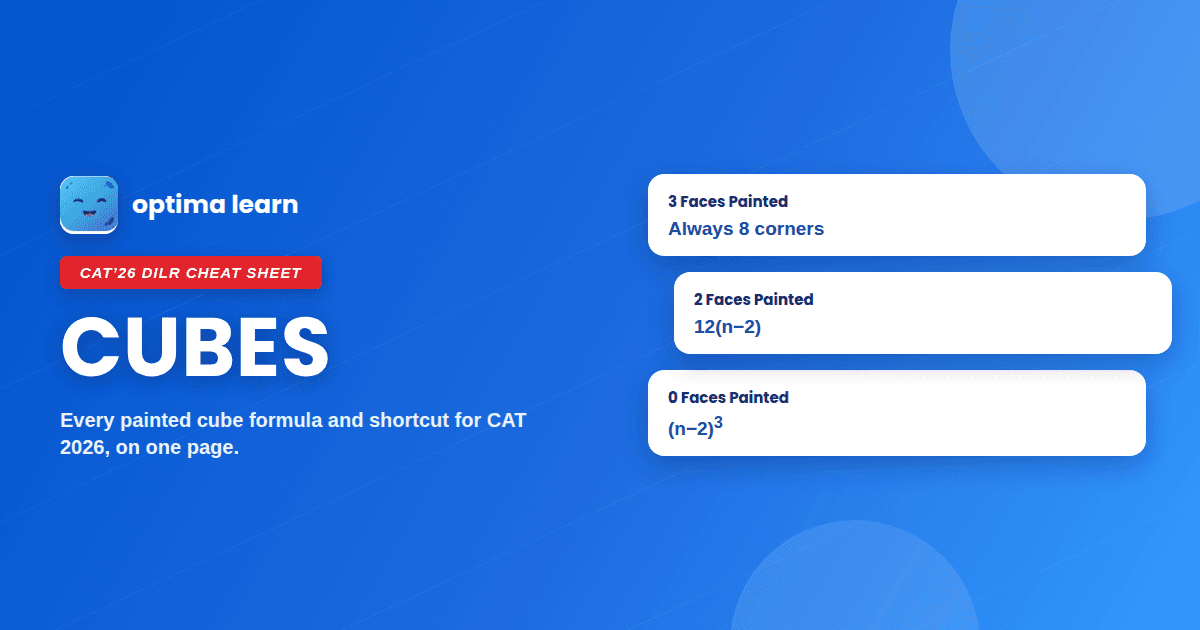
DILR
Cubes
A one-page CAT 2026 reference for painted cube problems, covering the basic n-cube setup, corner/edge/face/interior counts, the reconciliation check, partially painted cubes, opposite versus adjacent…
View
A one-page CAT 2026 reference for selection and combinations, covering basic nCr, selection versus arrangement, fixed inclusion and exclusion, identical items, group division, diagonals, committees with a chairperson, and complementary counting. Each box carries one worked example, plus a shortcuts checklist, common traps and a rapid-revision box.

Selection is the quieter half of Permutation and Combination, and it is also the half that actually shows up more on CAT, hiding inside committee questions, group-division puzzles and geometry counts. The core idea is simple. Order does not matter, so nCr counts groups, not sequences. Where students lose marks is everywhere around that core idea, mixing up selection with arrangement, forgetting the extra division when groups end up equal in size, or grinding through cases that a quick complement would have closed in one line. This sheet gathers the moves you actually use, from the basic nCr formula and inclusion or exclusion rules, through identical items and group division, to diagonals, committees and complementary counting. Every box carries one worked example with real numbers, so you drill the method instead of just recognising the formula.
Selection questions reward pattern recognition more than raw calculation, so the fastest gains come from spotting which of these thirteen setups a question is actually built from. Read the question for order, restriction and group size before you touch a formula, and half the battle is already won. When you want an honest read on where you stand, run a full mock and check your projected percentile with the Optima Learn CAT score predictor, then work through the quant breakdowns on the blog. If you would rather build a plan with a person, book a free call with an Optima Learn mentor and shape one to your target.
Hand-picked LR puzzles and DI caselets with a timer and full solution breakdown.
Quick answers about how these cheatsheets are written, maintained, and best used.
Keep going
A one-page CAT 2026 reference for painted cube problems, covering the basic n-cube setup, corner/edge/face/interior counts, the reconciliation check, partially painted cubes, opposite versus adjacent…
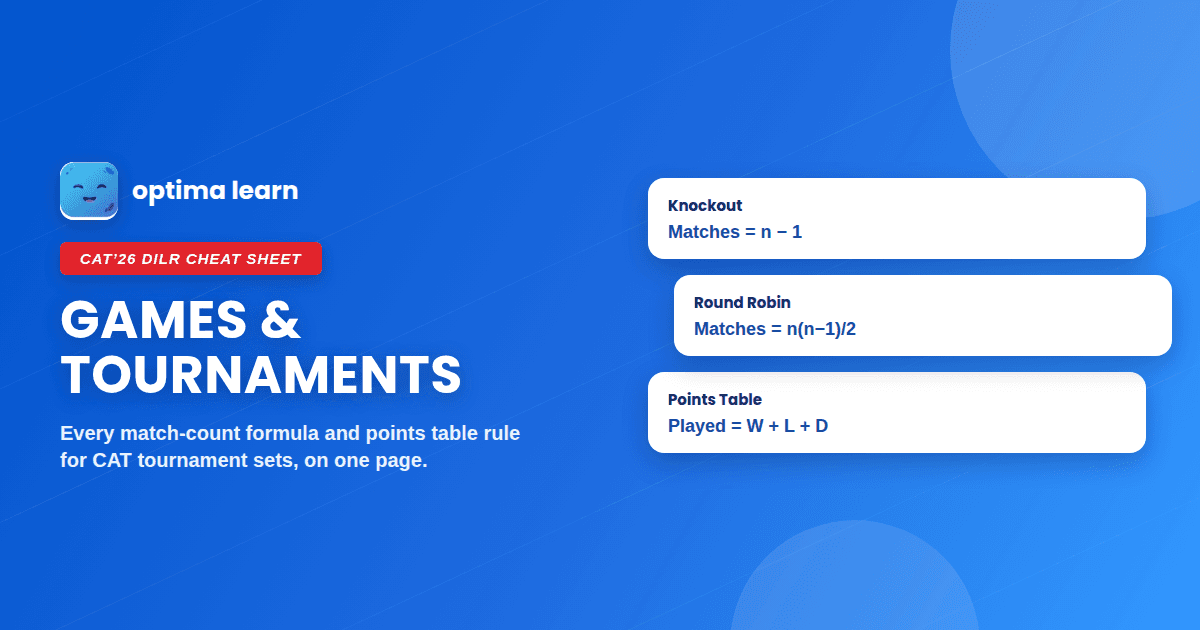
A one-page CAT 2026 reference for games and tournaments, covering knockout and round-robin match counts, byes, double round-robins, points table reconciliation and scoring, qualification ceilings,…
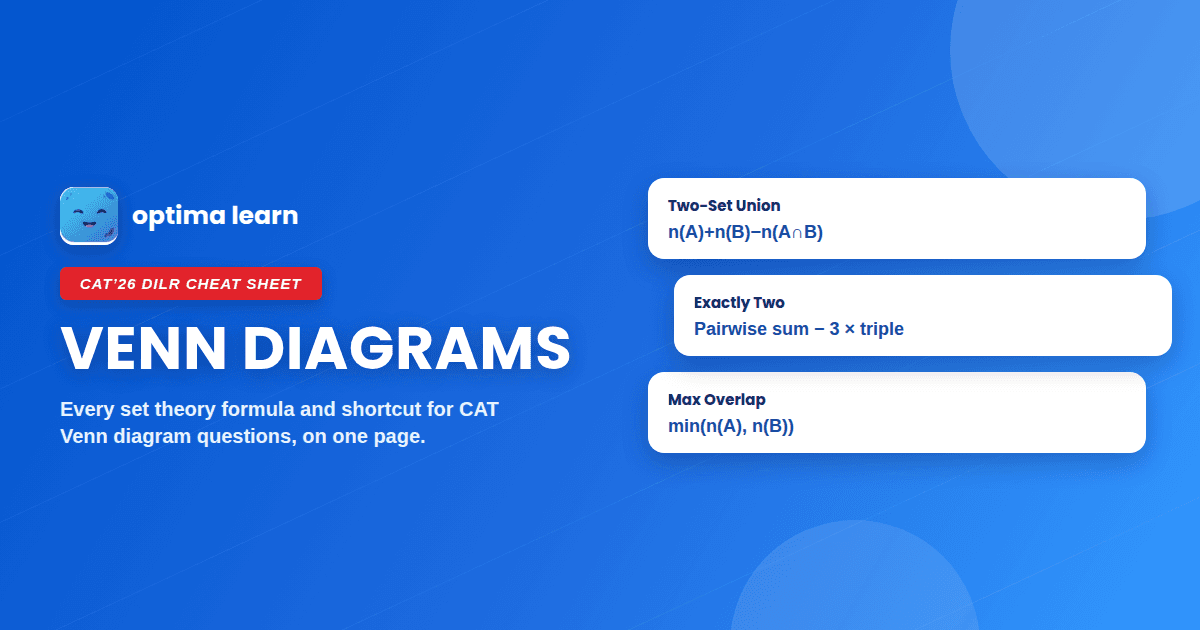
A one-page CAT 2026 reference for Venn diagrams and set theory, covering the two-set and three-set union formulas, only-one and neither regions, exactly-two and exactly-one breakdowns, the full…